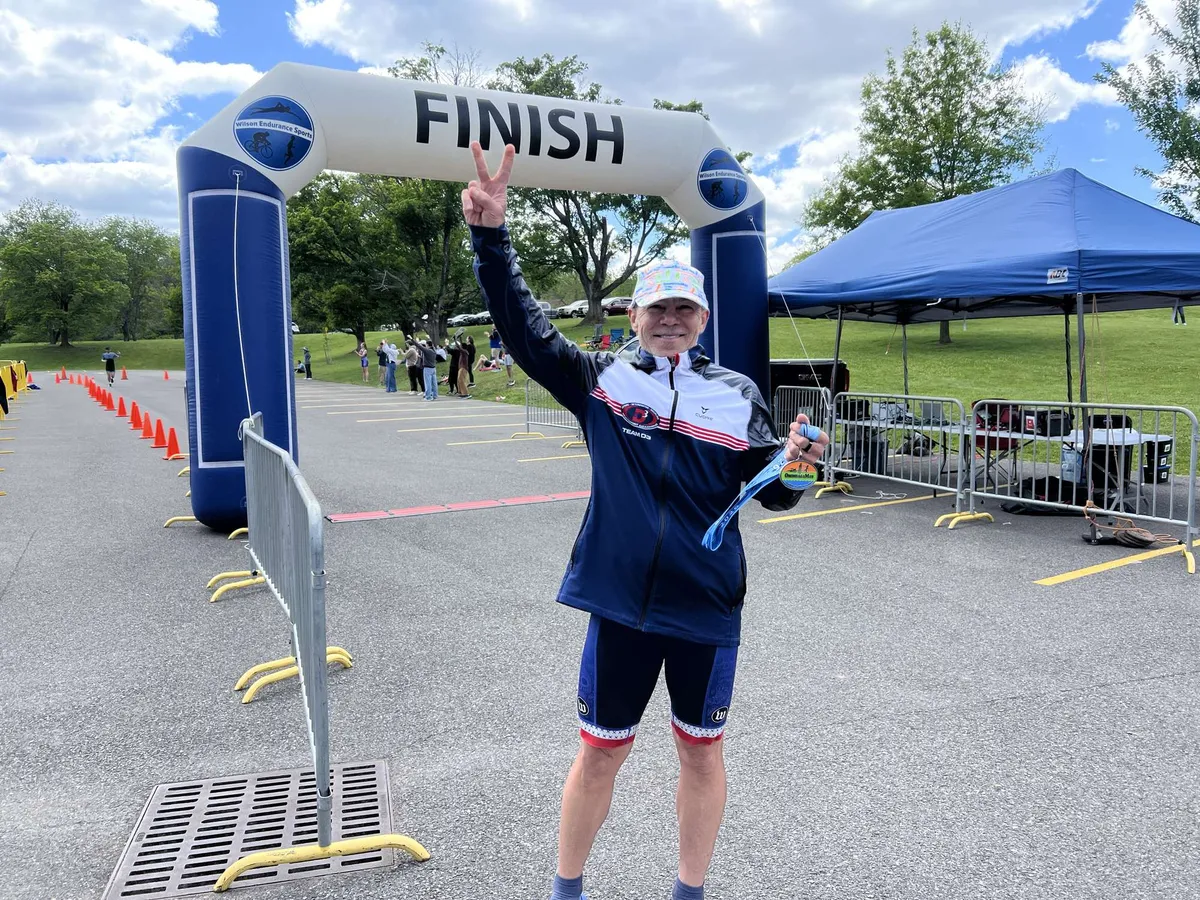
OnondagaMan, May 30, 2026 — Frozen but Not Beaten, 1st AG
Prefer to watch this one? Here's the race recap on YouTube: OnondagaMan 2026
Strategy
OnondagaMan isn't an official Ironman-branded race, it's an independently run event at the Half Ironman 70.3 distance, but the format and demand are the same: 1.2-mile swim, 56-mile bike, 13.1-mile run. Going in, I wasn't chasing a specific finishing time. My training block leading up to this one had only hit about 75% of what I'd planned, and almost all of that missing quarter was long bike rides. I knew it, and I knew it would show up somewhere on race day; I didn't know where or how much. The honest target for the day was simpler than usual: finish strong, stay in the fight for the age group podium, and treat the day as information for Lake Placid, 7 weeks out, not a race to force a number in.
Race Experience
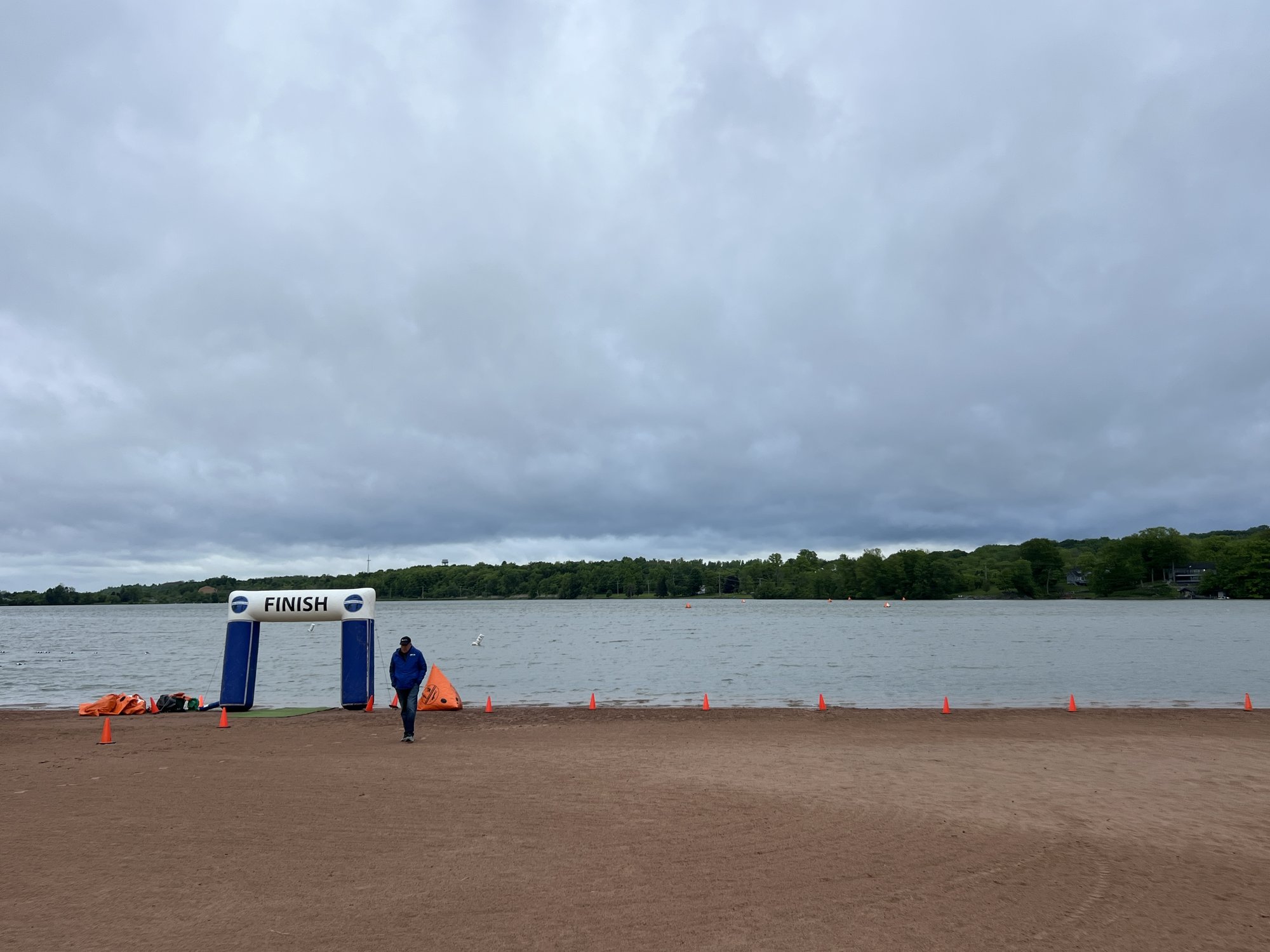
The swim was, without exaggeration, the toughest open water swim I've done. Not because of the distance, Jamesville Reservoir isn't a huge body of water, but because of the conditions. Wind was 25 mph, with gusts up to 45 mph. You wouldn't feel it close to the shoreline, but once you got out away from it, it felt like being inside a dishwasher. I couldn't sight properly, couldn't hold a stroke rhythm, and ended up covering meaningfully more distance than the course actually measured because the water kept pushing me off line.
I got out of the water and into the changing tent to swap my wetsuit for a windbreaker, since the air was sitting in the low 60s, and my body just wouldn't stop shivering. What's normally a 3-minute transition turned into 12. At some point I had to just tell myself to get moving, the sooner I got on the bike and started generating heat, the sooner it would pass.
The bike course was genuinely fun, rolling hills the whole way that never let up, but it took about 1.5 hours before my body actually felt warm, and my toes didn't feel normal again until almost 2.5 hours in. That's where the missing long rides caught up with me. The hills themselves weren't the problem, the endurance to sustain effort on them for that long, in that cold, was.
The run was the one place everything came together. It's historically been my weakest discipline, I usually hold the middle of the pack in the swim, push hard on the bike, then fade badly on the run, but this time was different. I felt strong the whole way, and I know exactly why: I'd put specific, deliberate work into the muscles that have always let me down on the run. For once, that showed up when it mattered.
Outcome
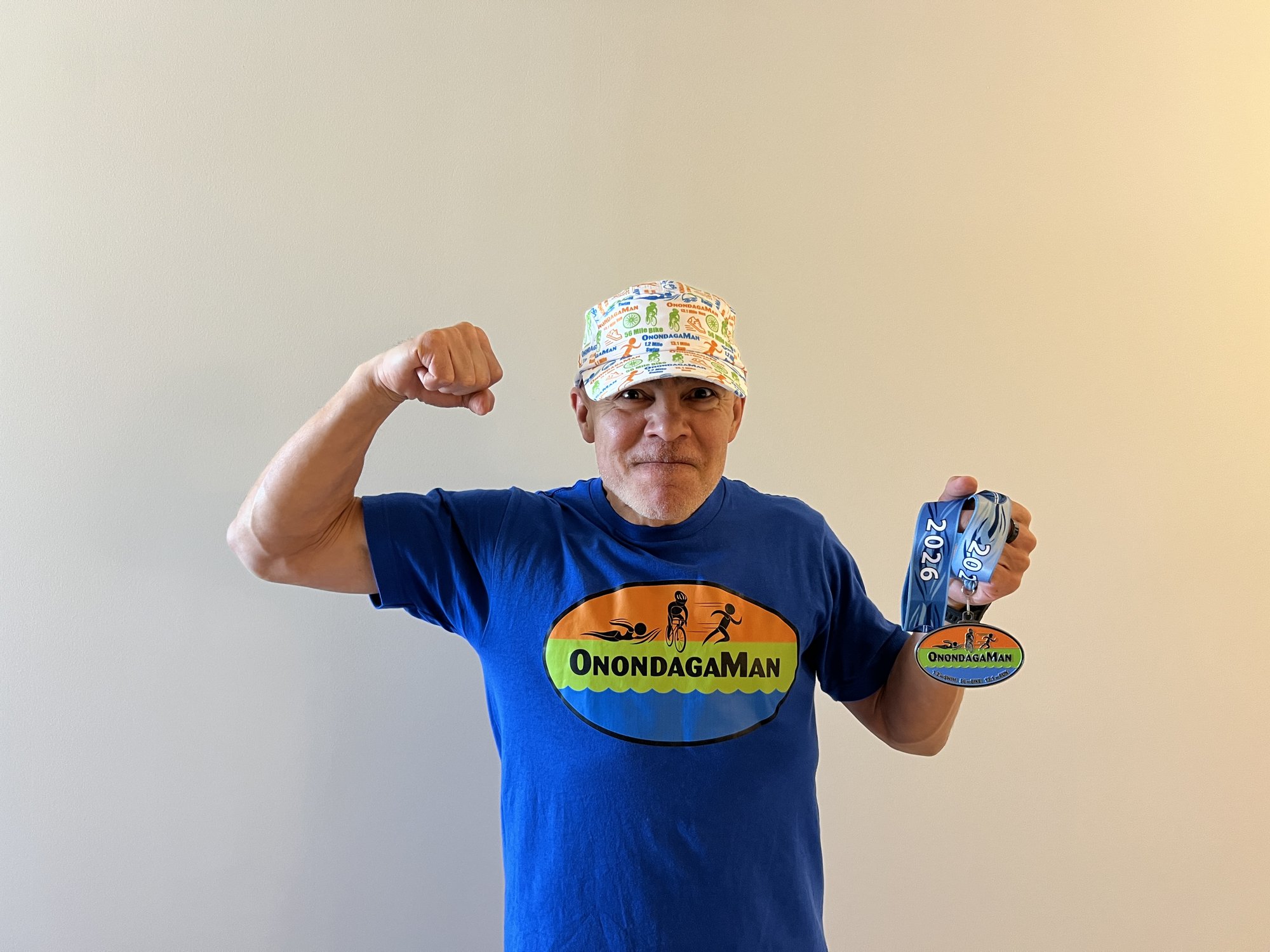
Final result: 1st place in my age group, 6:20:12 overall, substantially longer than I would have liked. I'm proud of the finish, but I don't think it's a full reflection of either the competition that showed up or what I'm actually capable of. Between the conditions and the training gap coming in, this was a day to survive and learn from more than a day to chase a number.
Lessons Learned
My body is leaner than it's been in years, which is a good thing on paper, but it also means less natural insulation, and I felt that difference directly in how hard the cold hit me yesterday. Going forward, I either need to train more deliberately in cold conditions or be more selective about picking races in warmer climates.
Missing 25% of my planned training, almost all of it long bike rides, cost me real time on race day. That's the confirmation I needed heading into Lake Placid: the long, unglamorous rides aren't optional; they're the ones that show up first when it counts.
Recovery isn't just about what happens after a race; it starts the night before. I didn't sleep well the night before this one, and part of that was simply forgetting my own pillow while traveling. Small thing, real impact. From now on, if I'm waking up at 2:30 or 3 AM, I need to be in bed by 6 PM, no exceptions.
Get My Hard-Won Lessons Straight To Your Inbox