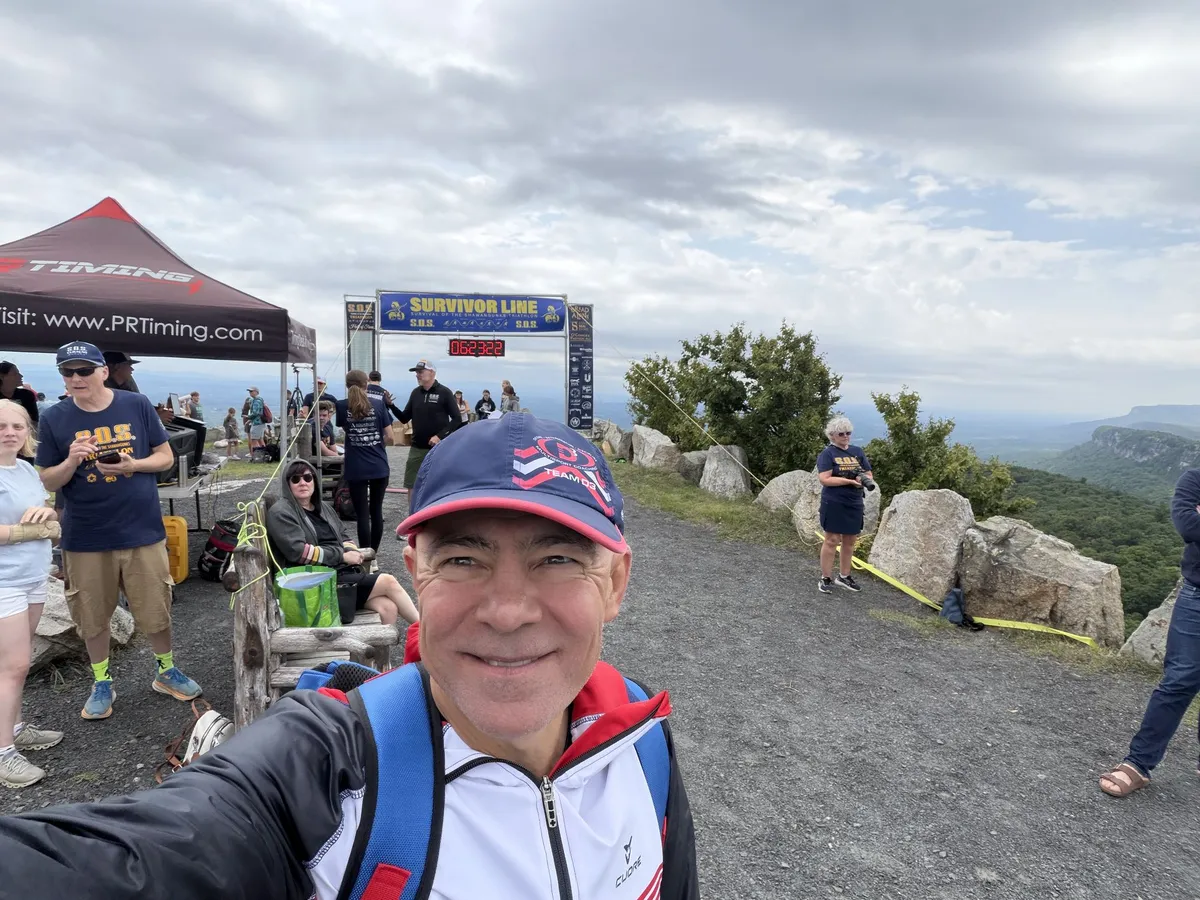
S.O.S. Triathlon, Aug 30, 2026 — Swim Feet Cramp, Massive PR
Prefer to watch this one? Here's the race recap on YouTube: S.O.S. Triathlon 2026
Strategy
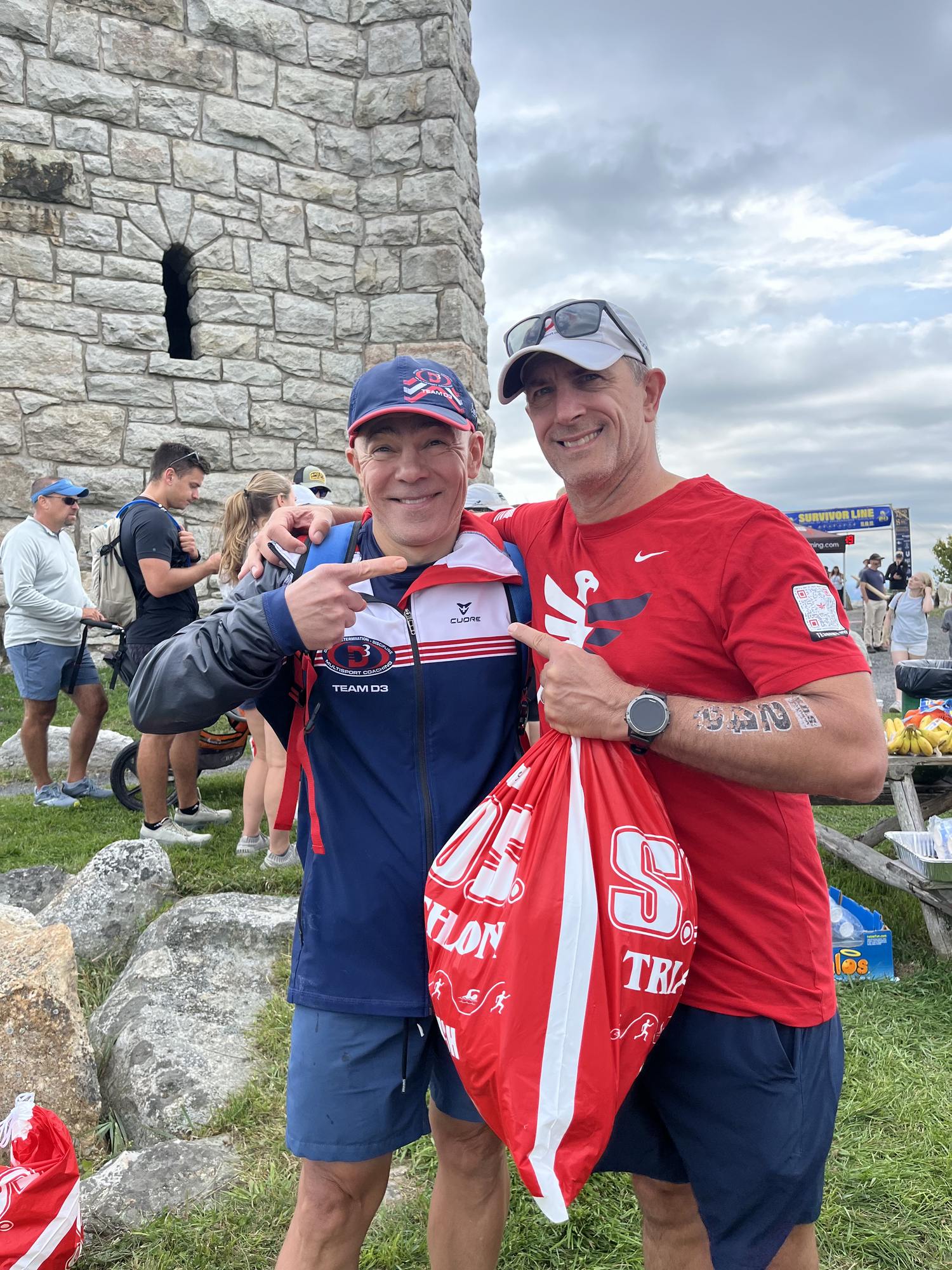
This was my 4th time racing S.O.S., and every year has been a different experience. Going in, I had 3 targets stacked on top of each other. My S.O.S. time from 2024, the same year I raced Ironman Lake Placid, was 6:25. My logic was simple: if I could beat my Lake Placid time this year, I should be able to beat that 6:25 S.O.S. time too, so that became my baseline target. Second was my personal best at S.O.S., 6:11. And then there was the stretch goal, the one I wasn't sure was even realistic: could I get under 6 hours? There were 2 coaches from D3 Multisport racing alongside me this year, Dave Sheanin and Mike Ricci, my own triathlon coach, and all 3 of us happened to land in the same age group. Race morning came in cooler than usual, low 60s, and I spent the warmup debating a light jacket right up until the last minute. I decided to skip it, and about 30-45 minutes into the bike the sun came out and it turned out to be the right call.
Race Experience
The bike started as a loose group with Mike, Dave, and me trading positions, and I eventually settled into drafting behind Dave to preserve energy before taking off on my own around the 45-minute mark. I wasn't chasing a bike PR here, I've learned that pushing too hard on the bike at S.O.S. just sets you up to cramp on the run, so I kept it steady and came in about a minute slower than my best bike split, no complaints. The first run climbs Cardiac Hill, and early on I hit my first cramp in the right leg. I've learned through past S.O.S. races not to stop when that happens, you just keep moving and it works itself out, and about a minute and a half later, it did.
Into the first swim, a mile-plus through Lake Awosting, I got passed by Dave, then cramped in my right foot near the turnaround buoy and had to hang onto a kayaker to keep from losing more energy. That's the part people don't talk about enough with open water cramping, it's not just a physical problem, it's a real test of your mind and your nerves. You're in the middle of a lake, you can't just stop and stretch it out the way you would on land, and the second you feel that muscle seize up, your instinct is to panic, which only tightens everything further. I had to consciously slow my breathing down and remind myself that panicking was the actual danger here, not the cramp itself. About 150 feet from shore, both feet cramped at once, and that was the closest I came to real panic all day, floating in open water with both legs locked up, no ability to kick, and shore still not close enough to just walk it in. I had to call a second kayaker over and hang on while I forced myself to relax through it instead of fighting it. That moment tested me more than anything else in the race, staying calm when every instinct was screaming to tense up and swim harder. Getting out of the water and bending down to put my shoes on triggered another cramp. I worked through it, got some water and a massage gun on my legs at the aid station, and headed into the second run cold from the swim but with a strategy I could hold onto: steady, consistent pace.
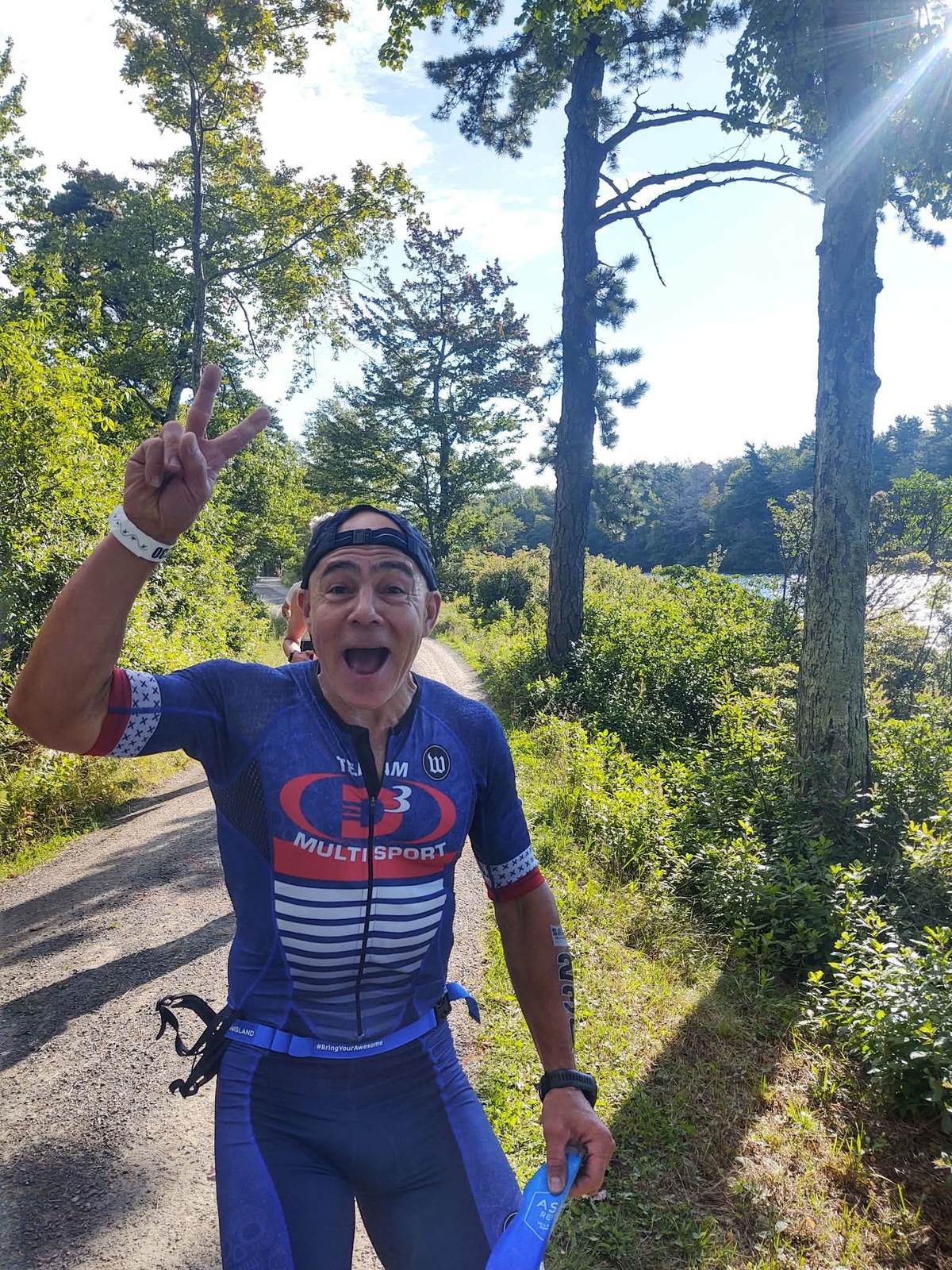
Climbing toward Castle Point and down to Lake Minnewaska I held around 9:30 pace, cooler temps keeping my heart rate down. At the lake I took my shoes off and dove into the second swim, a shorter half-mile, same approach: stay steady, save something for the 8.5 miles still ahead, the longest and most decisive stretch of the day. Coming out I went straight into the cramp-and-shoe routine again, and when I looked up, Mike was already out ahead of me. That lit a fire, I grabbed liquid and chews at the aid station and sprinted out of transition ahead of him.
The first mile out of Minnewaska drops straight downhill, all quads. By the time the trail leveled off into flat, steady woods I couldn't see Mike behind me and figured I'd bought some room. About halfway through that stretch he caught back up, and we ran together for a minute before he started to push the pace. I wasn't sure I had the fuel to match him right then, so I made a call: hold what I had in reserve and see what was left once we hit Godzilla, the climb still ahead of us. We kept running, him pulling and me holding, until we finally got there and he was about 25 feet ahead of me, jogging slowly up it. I know better than to run that hill, nobody gains time doing it, so I fast-walked it instead, closed the gap, and passed him mid-climb. He started walking too. From there it stayed mostly flat toward the third lake, and I pushed to bank as much time on him as I could.
Lake 3, Mohawk, came with a decision: swim it in my shoes instead of taking them off, since they drain well and I'd save the transition time. That paid off. Coming up from the final swim I saw Mike again, this time visibly cramping and struggling, and pushed past him. In the final stretch I spotted a runner with "56" written on his calf, right in my age group, and made him my new target, catching him just before the last staircase and finishing about 10 seconds ahead.
Outcome
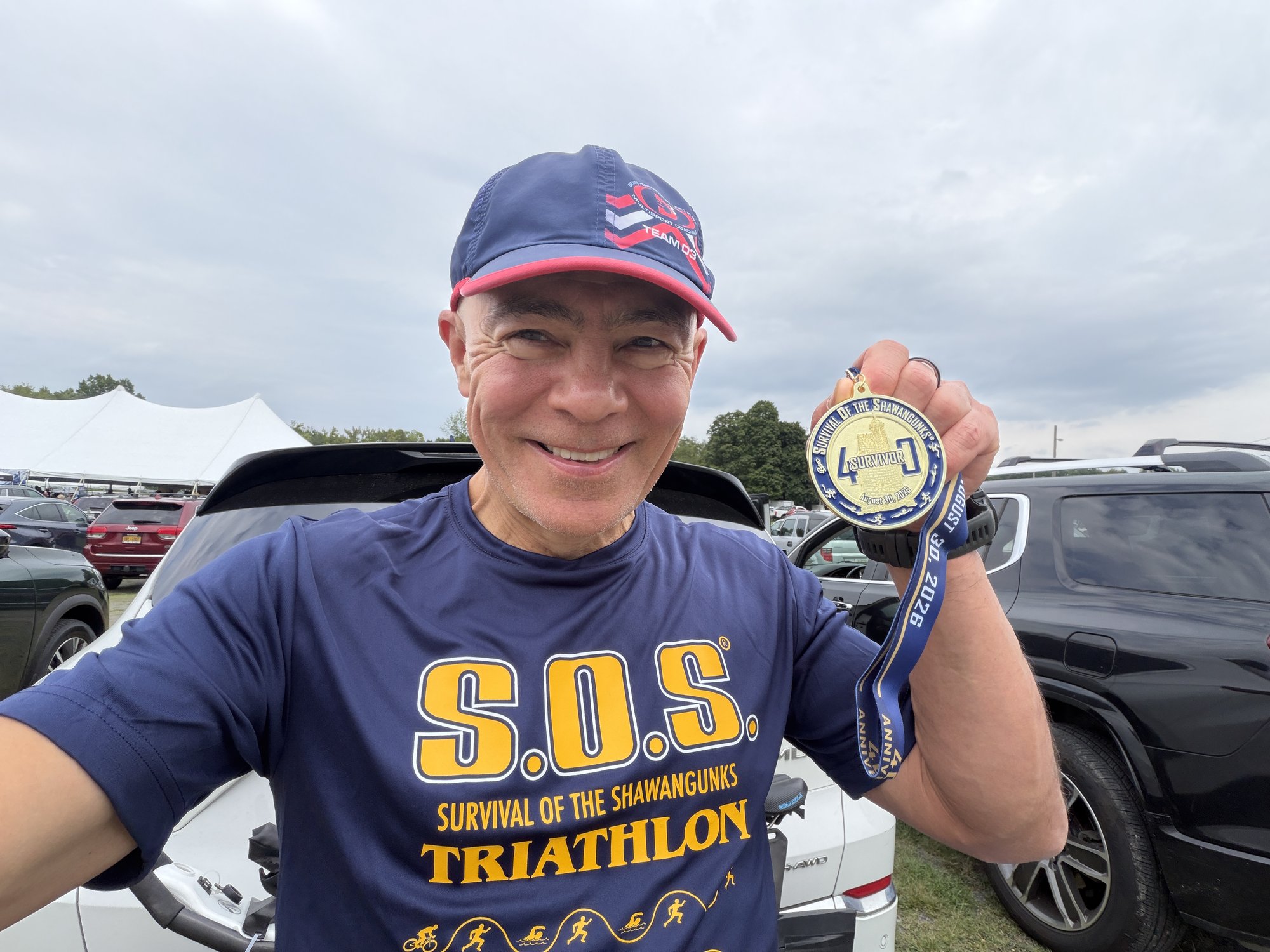
I finished in 5:47:54, beating every target I set going in, the 6:25 baseline, my previous S.O.S. best of 6:11, and the sub-6-hour stretch goal. Compared to my first S.O.S. finish in 2023 at 6:40, that's 53 minutes faster. I love this race so much so I've registered for next year already.
Lessons Learned
Cramping doesn't mean stopping. Every time it hit, in the leg, in the water, in transition, the fix was the same: keep moving, stay calm, and it works itself out.
Small strategic calls added up more than raw effort did this race, swimming the final leg in my shoes instead of stopping to remove them, and fast-walking Godzilla instead of running it, both turned into real time gained.
Racing in the same age group as your own coaches adds a layer of pressure that pushes you in a way training alone doesn't.
Get My Hard-Won Lessons Straight To Your Inbox